
by Chelsea Dykzeul,
Design Innovation student,
Te Herenga Waka | Victoria University of Wellington
Through a series of interviews, I explored the genealogy and personal histories of individuals within my community, gathering stories and information about their heritage and families. These conversations informed the design of each postcard, including the doors, stamps, and personalised messages. The doors combine architectural features and visual characteristics from countries represented within each individual’s heritage, creating a unique design that reflects their cultural background and personal history. Through this project, I aim to celebrate the cultural diversity within our communities while highlighting the connections that bring us together. ‘Greetings from…’ encourages an appreciation of both our differences and similarities, using personal stories and architecture to create connections between people, cultures, and communities.
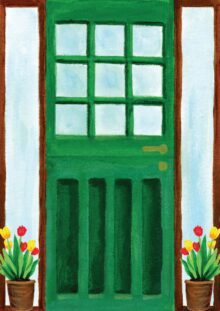
Reflecting Dutch and New Zealand culture, this door combines traditional architecture with personal identity. Associated with historical Dutch architecture, the painted wood features a distinctive green colour, inspired by the traditional canal houses of the Netherlands. Featuring paned windows on the upper half and board-and-batten detailing on the lower half, this door is designed in the well-known Dutch door style. Framing either side of the door, slim sidelights allow additional natural light to enter, while creating a sense of symmetry within the design. Tulips have been integrated into the design, representing the recognisable symbol of Dutch culture and the individual’s favourite flower, creating a visual connection between the individual and their culture. As a nod to the individual’s family history in the Netherlands, the personalised stamp includes a hand-painted image of a windmill located in the town where their family is from.
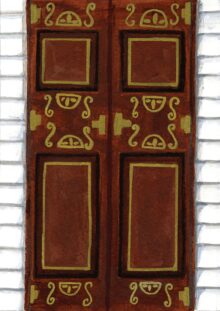
Drawing inspiration from the architecture of the Czech Republic, this door incorporates subtle influences from New Zealand and traditional English architecture. Reflective of the ornamental characteristics of Czech Baroque and Art Nouveau architecture, this door exhibits intricate stucco-inspired decorations and carved detailing. Inspired by the symbol of royalty and Catholic triumph, decorative brackets have been included in the design to mirror traditional brass detailing seen on historic doors throughout Prague. Produced from the native New Zealand timber, Rimu, the door creates a connection between family ancestry and the individual’s current home country. The symmetrical four-panel configuration has been chosen to reflect traditional English Georgian architecture, combining influences from all three countries into one interconnected design. The personalised stamp showcases a painting of a carp fish. This has taken inspiration from the Czech Republic’s bathtub tradition of purchasing a carp to be served as the main dish on Christmas Day, celebrated on the 24th of December.
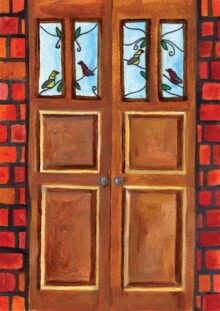
This door pays homage to the architectural heritage of Australian, New Zealand, Polish and English doors, while encapsulating the individual’s personal history. The symmetrical layout of the design features four uniform transom windows placed across the upper section, paired with the traditional four-panel configuration underneath. Integrated into the stained glass are intricate Australian finches, which recognise the individual’s family connection to Australia. The celebration of the individual’s culture brings together architectural influences from different countries. Highlighting stories from the individual’s childhood, the unique stamp features a horse head, connecting memories of horse carriages used to transport family belongings from place to place.
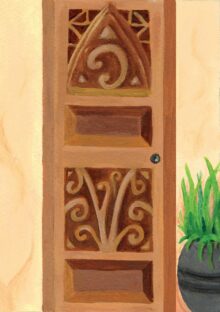
Rooted in the traditional architecture of Samoa, this door consists of elements from New Zealand, Belgian and English designs, showcasing a combination of various cultural influences. Highly inspired by the traditional Samoan fale, this door features curved arches and warm timber tones, used to create a welcoming and inviting atmosphere, reflective of the individual it is designed for. Recessed Georgian panels throughout present a sense of structure and symmetry, honouring the individual’s Polish and English heritage. The complex carvings implement historical Samoan symbolism, reflecting themes of growth, movement and plant life. The Laufala plant and hibiscus flower are seen on either side of the postcard, next to the door and on the stamp. They are used to represent Samoan plant life, celebrating the individual’s culture.
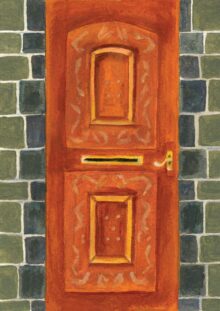
Crafted from peach wood, this door features a rounded upper panel, with recessed inner panels throughout, producing a refined and balanced design. The two panels are adorned with nine traditional Chinese door nails, symbolising positive energy and light, reflective of the individual it is designed after, connecting the individual and their culture to the door. The doorway is framed with Danish bricks, commonly seen throughout Denmark and New Zealand, creating a grounded entrance. The warm timber alongside the brickwork brings together colours and features of the individual’s mixed heritage. The stamp on the back of the postcard is a representation of the individual’s last name in traditional Chinese characters, paying homage to their ancestors.